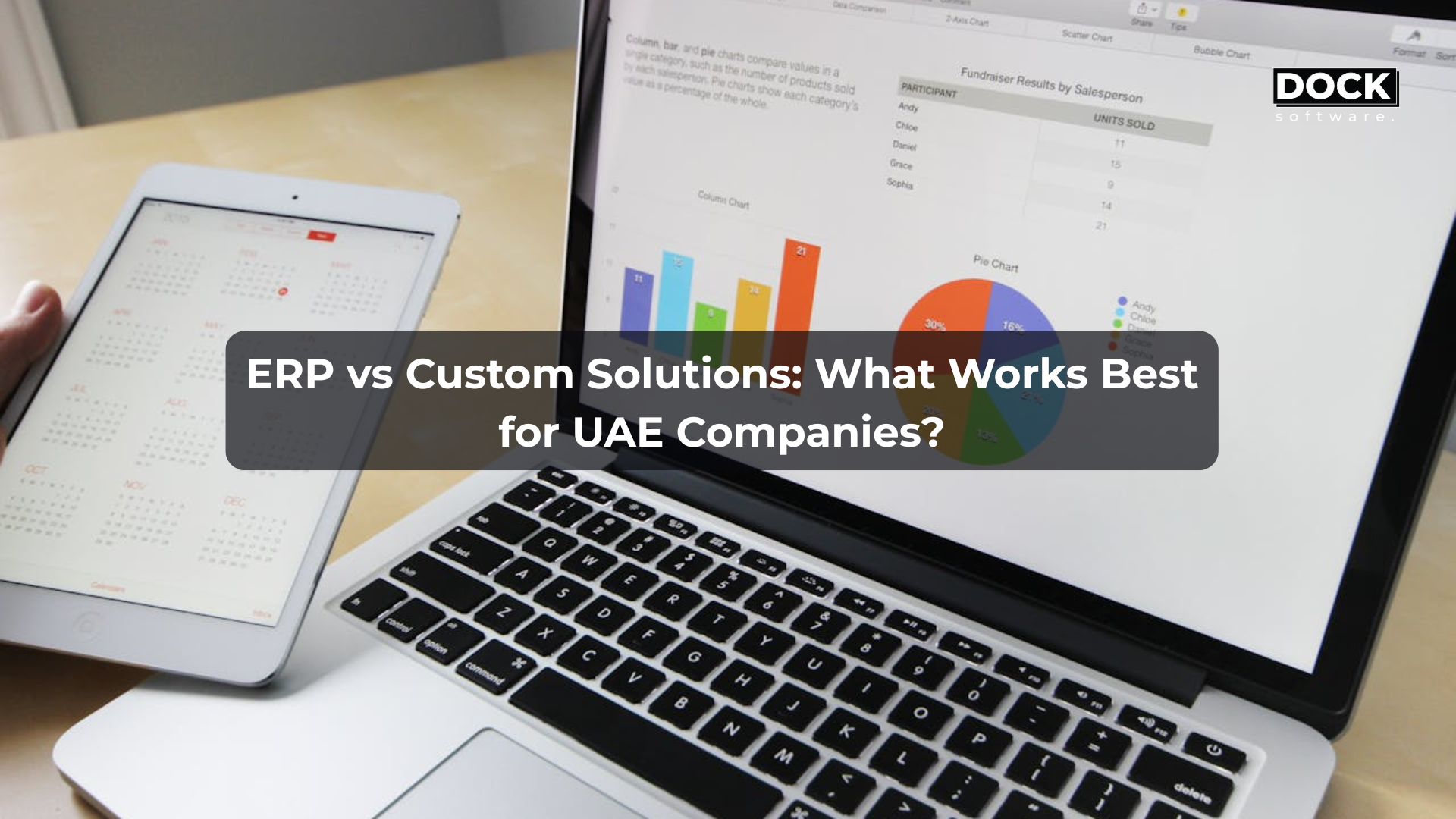
As businesses across the UAE accelerate their digital transformation, one key decision continues to shape operational success: choosing between an Enterprise Resource Planning (ERP) system and custom-built software solutions. From fast-growing startups to established enterprises, companies in Dubai and beyond must determine which approach aligns best with their goals, workflows, and long-term vision.
Both ERP and custom solutions offer distinct advantages. The right choice depends on factors such as business size, industry, scalability needs, and budget.
Understanding ERP Systems
ERP systems are comprehensive platforms designed to manage core business processes such as finance, human resources, supply chain, and customer relationships within a single unified system. Popular platforms like SAP, Oracle NetSuite, and Microsoft Dynamics 365 are widely used across the UAE.
For many companies, especially those in sectors like manufacturing, logistics, and retail, ERP systems provide a structured and standardized approach to operations. These platforms come with pre-built modules based on industry best practices, allowing businesses to implement solutions relatively quickly compared to building software from scratch.
One of the biggest advantages of ERP systems is integration. Instead of using multiple disconnected tools, businesses can centralize their operations, improving efficiency and data accuracy. This is particularly valuable in a fast-paced market like Dubai, where real-time decision-making is crucial.
However, ERP systems are not without limitations. Customization can be expensive and complex, and businesses often need to adapt their processes to fit the software rather than the other way around. For companies with unique workflows, this can become a significant drawback.
What Are Custom Software Solutions?
Custom software solutions are built specifically for a business’s unique needs. Instead of adapting operations to fit a pre-existing system, companies design software that aligns perfectly with their workflows, goals, and customer experience.
In the UAE, custom development is becoming increasingly popular among startups and innovative enterprises, particularly in industries such as real estate, fintech, and e-commerce. Businesses operating in dynamic environments often require flexibility that traditional ERP systems may not offer.
Custom solutions allow full control over features, integrations, and user experience. For example, a real estate company in Dubai can build a platform tailored to property listings, client management, and automated lead tracking—something that may require extensive customization in a standard ERP.
The trade-off, however, lies in time and cost. Custom software development typically requires a higher initial investment and longer implementation period. It also demands ongoing maintenance and updates, which businesses must plan for.
Key Comparison: ERP vs Custom Solutions
1. Implementation Speed
ERP systems are faster to deploy, thanks to their ready-made modules. Custom solutions take longer, as they are built from the ground up.
2. Flexibility
Custom software wins in flexibility. It is designed around your business, while ERP systems may require process adjustments.
3. Cost Structure
ERP solutions usually involve licensing fees, subscription costs, and customization expenses. Custom software has higher upfront costs but may be more cost-effective in the long run if tailored efficiently.
4. Scalability
Both options can scale, but in different ways. ERP systems scale through additional modules and upgrades, while custom solutions scale based on how well they are initially architected.
5. Competitive Advantage
Custom software can provide a unique edge by enabling features and workflows that competitors cannot easily replicate. ERP systems, while powerful, are often standardized across industries.
What Works Best for UAE Companies?
The UAE market is diverse, and there is no one-size-fits-all answer. However, certain patterns are emerging.
For large enterprises or companies with standardized operations—such as logistics firms, construction companies, and large retailers—ERP systems often make sense. They provide reliability, compliance, and a proven framework that supports complex operations.
On the other hand, startups and fast-growing businesses in Dubai’s innovation-driven sectors are increasingly leaning toward custom solutions. These companies prioritize agility, user experience, and differentiation, which custom software enables.
In many cases, a hybrid approach is becoming the preferred strategy. Businesses use ERP systems for core functions like finance and HR, while building custom applications for customer-facing or industry-specific processes. This allows companies to benefit from the stability of ERP while maintaining flexibility where it matters most.
Final Thoughts
Choosing between ERP and custom software is ultimately about aligning technology with business strategy. UAE companies must evaluate not only their current needs but also their future ambitions.
ERP systems offer structure, speed, and reliability—ideal for organizations seeking efficiency and standardization. Custom solutions provide flexibility, innovation, and a competitive edge—perfect for businesses aiming to stand out in a rapidly evolving market.
In a forward-thinking ecosystem like Dubai, the smartest companies are not just choosing one over the other. They are strategically combining both to create powerful, scalable, and future-ready digital infrastructures.
About Dock Software
Insights & Innovation