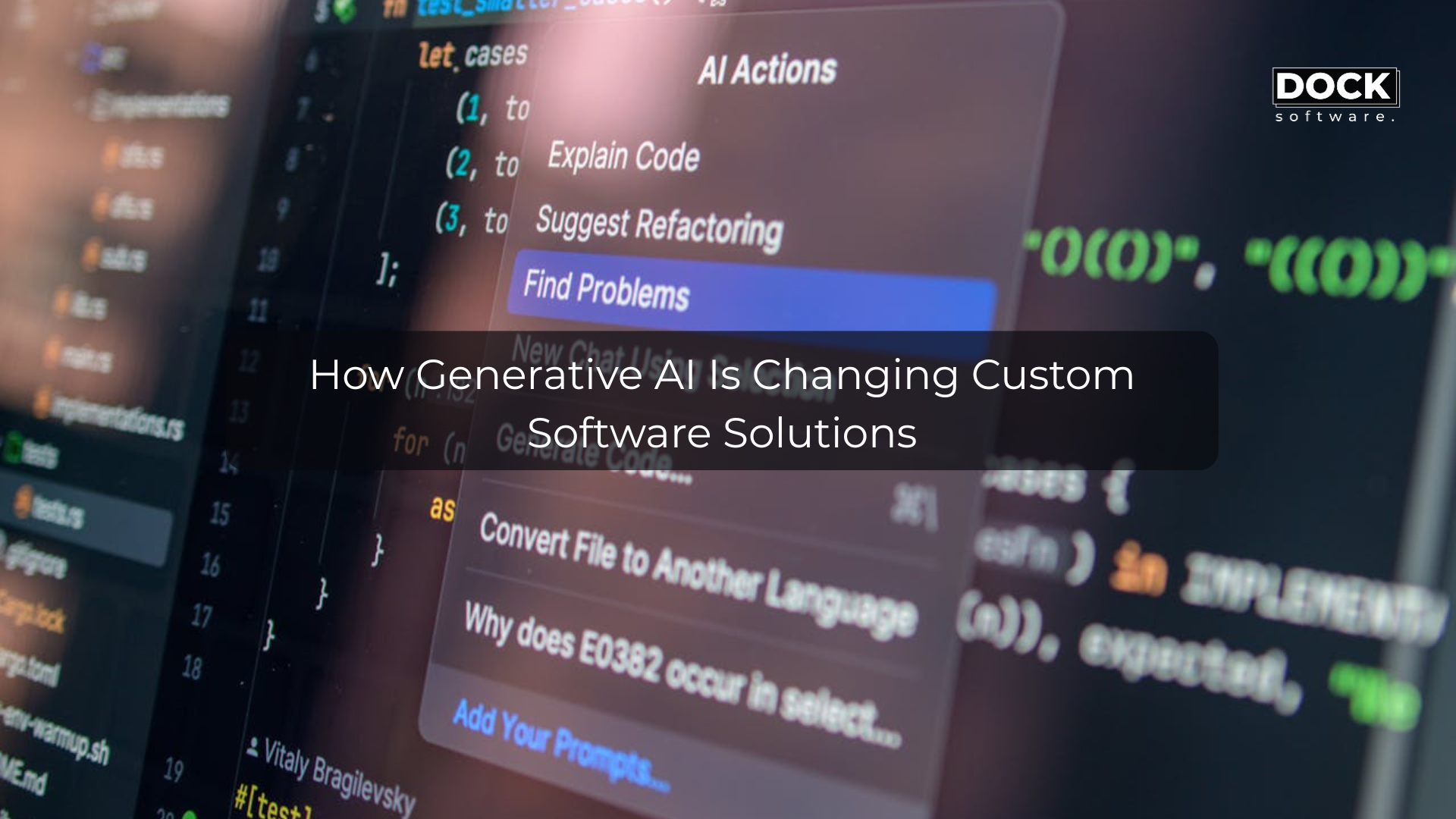
In recent years, generative AI has moved from a futuristic concept to a practical tool that is reshaping industries—and custom software development is no exception. For businesses investing in tailored digital solutions, generative AI is not just an upgrade; it represents a fundamental shift in how software is designed, developed, and maintained. From accelerating development timelines to enhancing personalization, generative AI is redefining what’s possible in custom software solutions.
Accelerating Development Cycles
One of the most immediate impacts of generative AI is speed. Traditionally, building custom software required extensive coding, testing, and iteration. Now, AI-powered tools can generate code snippets, automate repetitive tasks, and even suggest architectural improvements. This significantly reduces development time.
Developers are no longer starting from scratch. Instead, they are working alongside AI assistants that can generate boilerplate code, identify bugs early, and recommend optimizations. As a result, businesses can move from idea to deployment much faster, gaining a competitive edge in fast-paced markets.
Enhancing Personalization
Custom software has always been about tailoring solutions to specific business needs. Generative AI takes this a step further by enabling real-time personalization at scale. Applications can now adapt dynamically to user behavior, preferences, and patterns.
For example, customer-facing platforms can use AI to generate personalized recommendations, content, or workflows. Internal business tools can adjust interfaces based on employee roles or usage habits. This level of customization improves user experience and increases engagement, making software more intuitive and effective.
Improving Decision-Making with Intelligent Insights
Generative AI doesn’t just build software—it makes it smarter. By analyzing large volumes of data, AI models can generate insights that help businesses make better decisions.
Custom software solutions are now being designed with built-in intelligence. Whether it’s forecasting sales trends, identifying operational inefficiencies, or predicting customer behavior, AI-driven insights are becoming a core feature rather than an add-on. This transforms software from a passive tool into an active decision-making partner.
Reducing Development Costs
While the initial integration of generative AI may require investment, it often leads to significant cost savings in the long run. Automation of coding, testing, and documentation reduces the need for large development teams and minimizes human error.
Additionally, faster development cycles mean lower project costs and quicker returns on investment. Businesses can allocate resources more efficiently, focusing on innovation and strategy rather than repetitive technical tasks.
Enabling Rapid Prototyping and MVP Development
For startups and businesses exploring new ideas, generative AI is a game changer. It allows for rapid prototyping and faster creation of Minimum Viable Products (MVPs).
Instead of spending months developing a basic version of a product, teams can use AI to quickly generate functional prototypes. This enables faster testing, feedback collection, and iteration. Companies can validate ideas earlier, reducing the risk of investing in solutions that may not succeed in the market.
Strengthening Collaboration Between Teams
Generative AI also improves collaboration between developers, designers, and business stakeholders. With AI-generated mockups, documentation, and even natural language explanations of code, communication becomes clearer and more efficient.
Non-technical stakeholders can better understand the development process, while developers can align more closely with business goals. This leads to more cohesive projects and better end results.
Addressing Challenges and Ethical Considerations
Despite its advantages, the adoption of generative AI in custom software development comes with challenges. Issues such as data privacy, security, and ethical use of AI must be carefully managed.
Businesses need to ensure that AI-generated code is secure and compliant with industry standards. There is also the question of intellectual property, as AI models are trained on vast datasets that may include proprietary information. Transparency and responsible AI practices are essential to mitigate these risks.
The Future of Custom Software Development
Looking ahead, generative AI is set to become an integral part of the software development lifecycle. As models become more advanced, we can expect even greater levels of automation, intelligence, and creativity.
Custom software solutions will no longer be limited by time or technical constraints. Instead, they will be shaped by innovation, adaptability, and user-centric design. Companies that embrace generative AI today are positioning themselves to lead in a future where software is not just built—but intelligently crafted.
Conclusion
Generative AI is transforming custom software solutions in profound ways. It accelerates development, enhances personalization, reduces costs, and introduces intelligent capabilities that were once unimaginable. While challenges remain, the benefits far outweigh the risks when implemented thoughtfully.
For businesses, the message is clear: generative AI is not just a trend—it’s a strategic advantage. Those who leverage it effectively will not only build better software but also unlock new opportunities for growth and innovation.
About Dock Software
Insights & Innovation