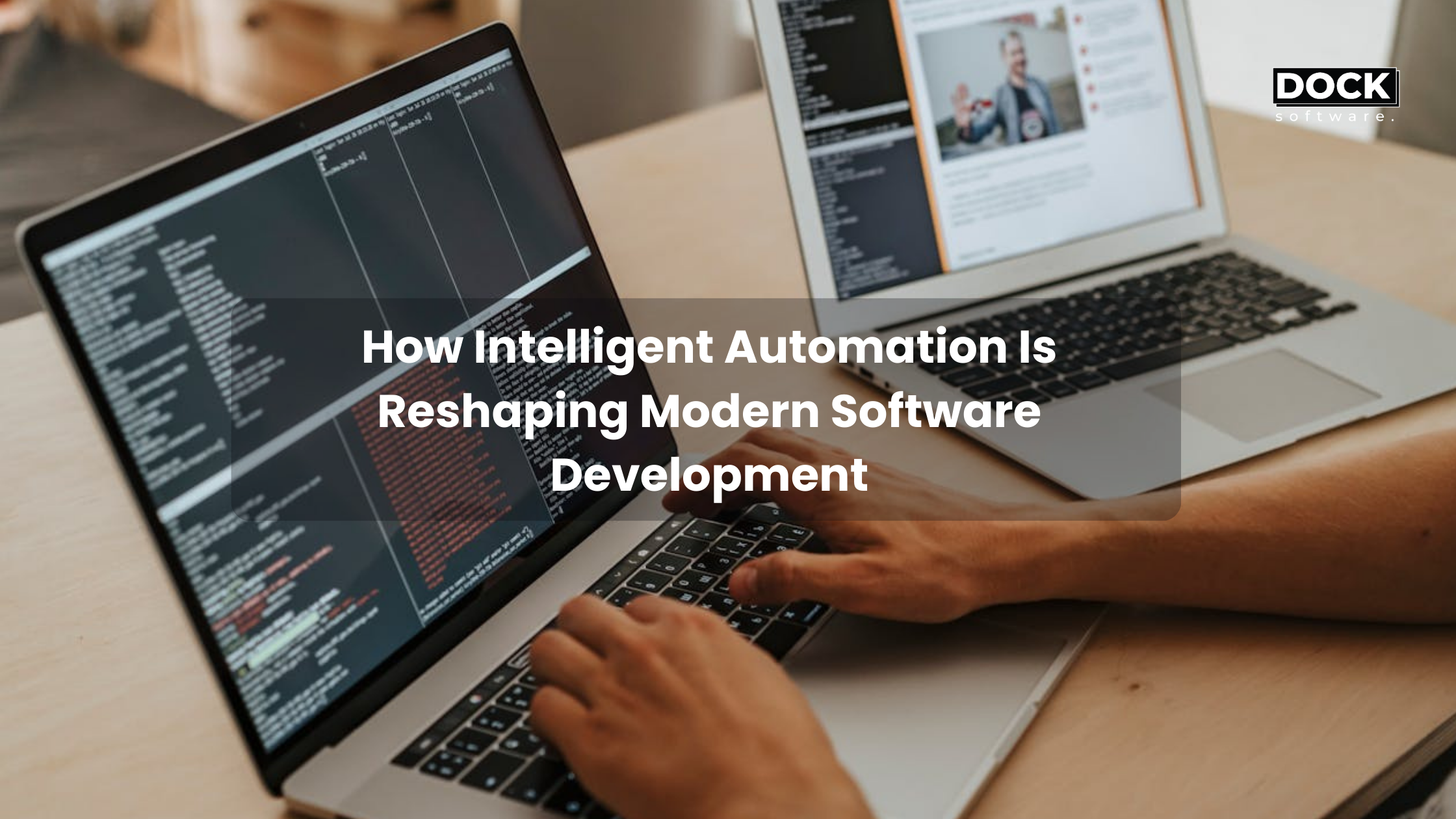
In today’s fast-evolving digital landscape, software development is no longer just about writing functional code. Businesses now compete on speed, adaptability, and innovation. Intelligent automation has emerged as a key driver in this transformation, allowing companies to streamline workflows, enhance productivity, and deliver smarter, more efficient applications.
Understanding Intelligent Automation
Intelligent automation combines robotic process automation (RPA) with artificial intelligence (AI) technologies, such as machine learning, natural language processing, and predictive analytics. While RPA handles repetitive, rule-based tasks, AI adds decision-making capabilities that enable software systems to operate with a degree of human-like intelligence.
The integration of these technologies in software development enables teams to focus on higher-value activities, reduces errors, and accelerates delivery times. It also ensures that applications are not only functional but adaptive, learning from user behavior and operational data over time.
Accelerating the Development Lifecycle
Traditional software development processes often involve long cycles of planning, coding, testing, and deployment. While this approach has been reliable, it is increasingly misaligned with the speed demands of modern businesses.
Intelligent automation allows developers to automate repetitive coding, testing, and deployment tasks, significantly shortening the development lifecycle. Continuous integration and continuous delivery (CI/CD) pipelines powered by AI-driven automation enable real-time code validation, automated testing, and seamless deployment. As a result, development teams can release updates more frequently, respond faster to market changes, and maintain a competitive edge.
Enhancing Software Quality
One of the most critical challenges in modern software is ensuring quality without slowing down development. Intelligent automation addresses this by enabling automated testing at every stage of the software lifecycle.
AI algorithms can identify patterns and potential bugs that might escape human testers, predict areas of the code likely to fail, and even suggest optimized solutions. This predictive capability reduces downtime, improves reliability, and increases user satisfaction. By combining automation with human oversight, organizations achieve higher-quality software at a faster pace than traditional methods.
Data-Driven Decision Making
Modern applications are expected to handle large volumes of data efficiently. Intelligent automation helps developers integrate analytics into the development process itself. By continuously analyzing performance metrics, user behavior, and system logs, AI can provide actionable insights for improving application functionality.
For example, intelligent automation can identify which features users interact with most, detect bottlenecks in processing, and even suggest modifications to enhance user experience. This data-driven approach ensures that software evolves in line with real-world usage, making applications more relevant and effective.
Reducing Operational Costs
Implementing intelligent automation in software development is not only about speed and quality; it also reduces operational costs. By automating repetitive and resource-intensive tasks, companies can allocate talent to more strategic initiatives.
Automation minimizes human error, reduces the need for extensive manual testing, and accelerates problem resolution. Over time, these efficiencies translate into lower development costs, faster time-to-market, and increased return on investment.
Enabling Innovation
Perhaps the most significant advantage of intelligent automation is its ability to free developers to innovate. By removing mundane tasks, teams can focus on creative problem-solving, experimenting with new features, and integrating emerging technologies like AI-native applications, predictive analytics, or immersive user interfaces.
This culture of innovation fosters software that not only meets current business needs but anticipates future demands, giving companies a long-term strategic advantage.
Building Intelligent Software for the Future
The integration of intelligent automation into software development is no longer optional—it is becoming a necessity. Businesses that adopt these practices are better equipped to deliver high-quality, scalable, and adaptive applications in a highly competitive market.
At its core, intelligent automation empowers development teams to combine human ingenuity with machine efficiency, resulting in software that is faster, smarter, and more aligned with business objectives.
As technology continues to advance, the companies that embrace intelligent automation will be the ones that define the next generation of digital innovation.
About Dock Software
Insights & Innovation