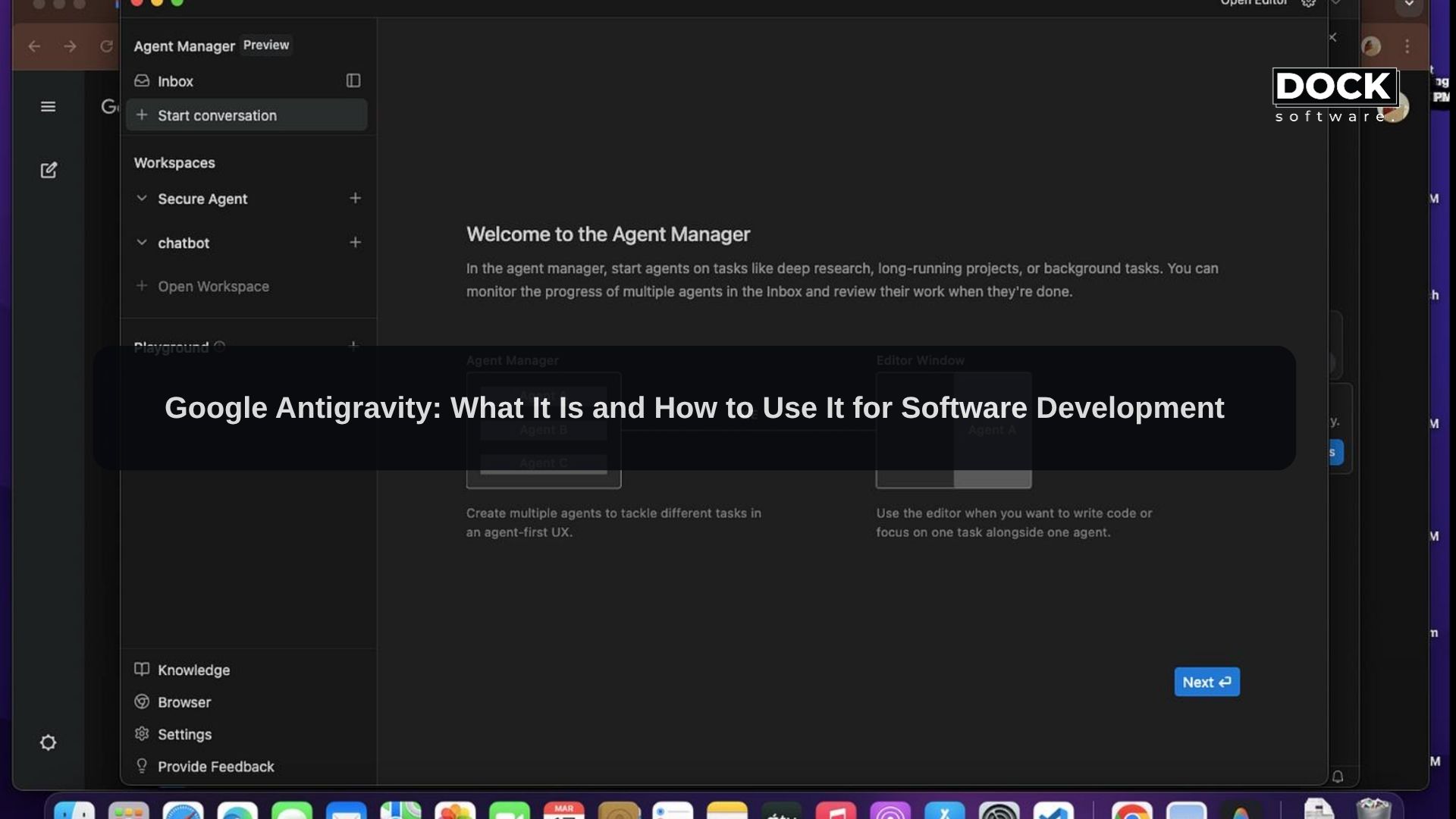
Software development is rapidly changing as artificial intelligence moves beyond simple code suggestions. One of the newer developments in this space is Google Antigravity, an AI-powered platform designed to help developers build, test and manage software with the assistance of autonomous AI agents.
Unlike traditional AI coding assistants that primarily suggest code, Antigravity is designed to handle broader development tasks. It can understand a project, create a plan, modify code, use development tools, test applications and provide feedback on the work it has completed.
What Is Google Antigravity?
Google Antigravity is an agentic development platform built around AI agents. These agents can work across the development environment, including the code editor, terminal and browser.
Instead of asking an AI tool to write a particular function, developers can provide a complete development objective. The AI agent can then break the requirement into smaller tasks and work through them.
For example, instead of saying, "Create a React login form," a developer could ask:
"Build a complete login system with React and Node.js, including form validation, authentication, error handling and responsive design. Run the application and test the login process."
The agent can then work through the different stages of the task rather than simply returning a code snippet.
How Can Developers Use Antigravity?
The biggest advantage of Antigravity is its ability to assist with end-to-end development workflows.
A developer can start by opening an existing project or creating a new application. They can then describe the feature they want to build in natural language.
The AI agent can analyze the existing codebase, identify relevant files and create an implementation plan. Once the plan is approved or executed, it can make the required code changes.
For web applications, the browser capabilities can also help the agent interact with the running application and verify whether features work as expected.
This makes it useful for tasks such as:
Building frontend components
Developing backend APIs
Connecting databases
Fixing bugs
Creating automated tests
Improving responsive designs
Refactoring existing code
Testing web application workflows
Multiple AI Agents for Development
Another interesting aspect of Antigravity is the ability to work with multiple AI agents. Different agents can focus on different parts of a software project.
For example, one agent could work on the frontend while another develops the API. A third agent could create tests, while another checks the application's user interface.
This approach can help development teams handle multiple tasks simultaneously and potentially reduce the time required to complete larger projects.
Why Is Antigravity Important?
The shift toward agentic development represents an important change in how developers interact with AI.
Traditional coding assistants generally help developers write code faster. Agentic platforms aim to help developers complete development tasks from start to finish.
However, this does not mean developers can completely step away from the process. AI-generated code still needs human review, particularly for security, authentication, database operations, performance and production deployment.
The Future of AI-Powered Software Development
Google Antigravity highlights where software development is heading: developers increasingly working alongside AI agents that can understand requirements, write code, test applications and solve problems.
For developers, startups and businesses building digital products, tools like Antigravity could make software development faster and more accessible.
The future may not simply be about humans writing code with AI assistance. Instead, it could be about humans defining what needs to be built while AI agents handle more of the engineering process.